
White Powder, Dark Patches, Blistering Paint: Reading Water Stains on Walls
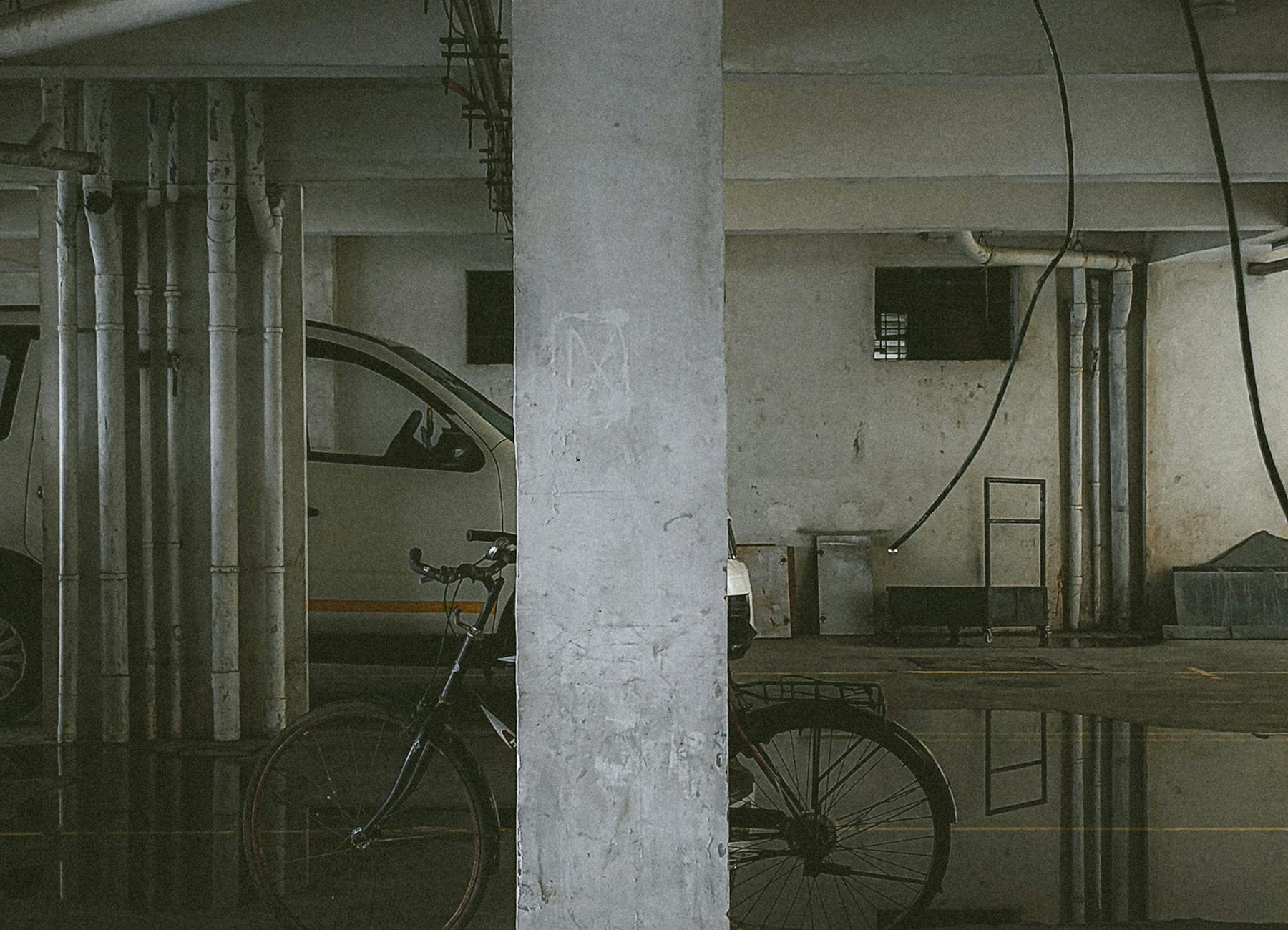
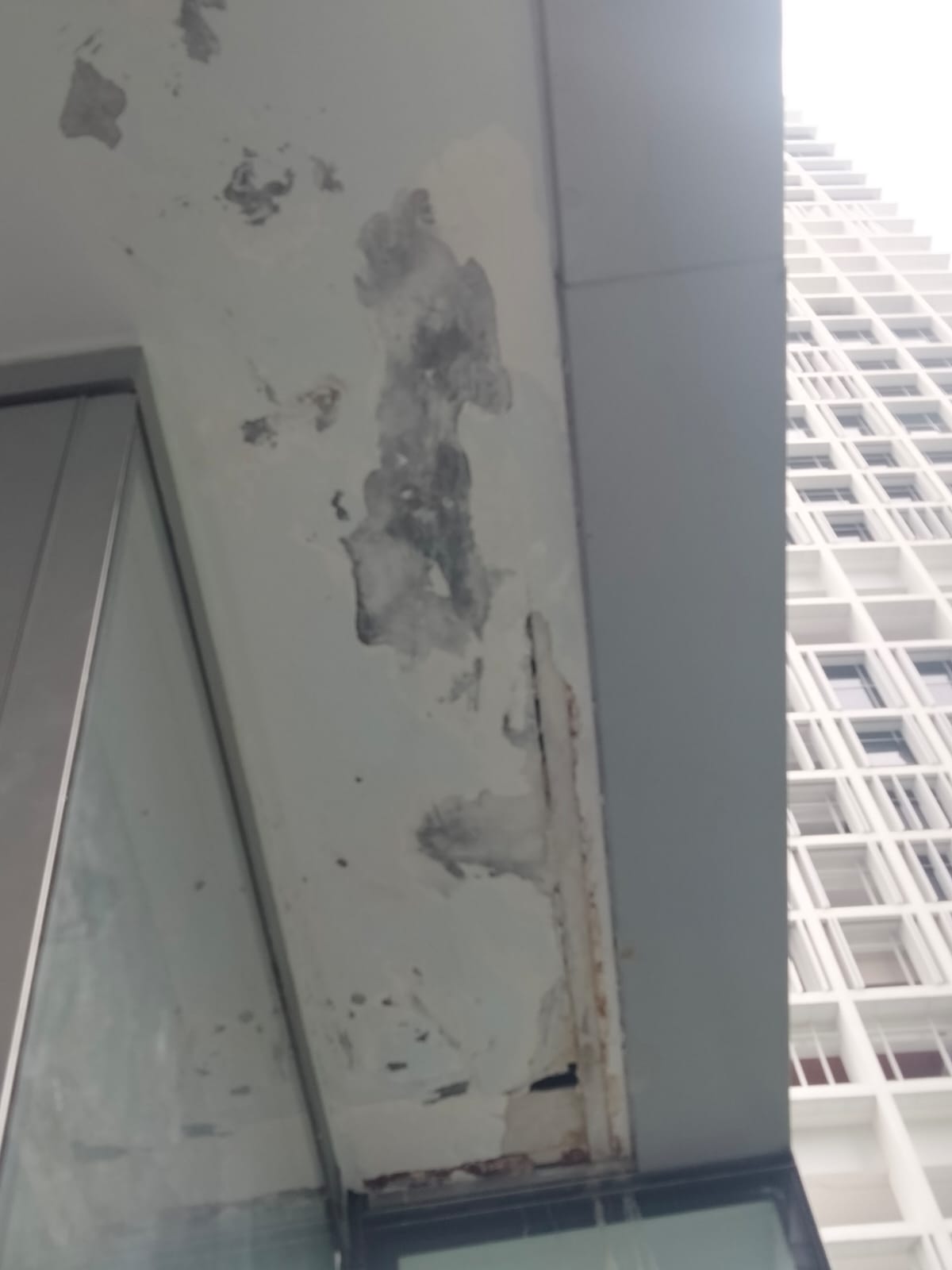
A wall that is failing tells you a surprising amount before anyone opens it up. The colour of the stain, whether it has an edge, whether there is powder or crust, and where on the wall it sits all narrow the cause down considerably — often enough to know whether you are dealing with rising damp, lateral seepage or a leaking pipe before the first test is run.
Efflorescence: the most useful stain there is
That white, chalky, crystalline bloom on concrete, render or brickwork is efflorescence. It forms when water moves through a cementitious material, dissolves soluble salts on the way, carries them to the surface and then evaporates — leaving the salt behind as a deposit.
The deposit itself is cosmetic. What it proves is not: efflorescence cannot form without liquid water travelling through the structure. Wiping it off and repainting solves nothing, because the next cycle of water simply brings more salt out through the new paint.
Efflorescence is the single most reliable visual confirmation that water is actively moving through a wall or slab rather than sitting on its surface.
Two variants are worth telling apart:
Efflorescence
Soft, powdery, often brushes off dry. Salts deposited on the surface as water evaporates from it.
Sub-florescence
Salts crystallising just below the surface instead. This one pushes outward and spalls render, paint or the face of the concrete.
Lime bloom
A harder, denser white crust — calcium carbonate from calcium hydroxide reacting with air. Common where water runs across new concrete.
Reading the rest of the wall
What the stain looks like
- Brown or yellow tide mark — long-running seepage carrying dissolved material
- Rust-orange streak — water reaching steel; check for spalling
- Dark grey, sharply defined patch — active, recent wetting
- Blistering, lifting paint — moisture behind the film pushing it off
- Black speckled growth — mould, meaning sustained surface dampness
Where it sits
- Low band along the base — rising damp or a failed skirting detail
- Mid-wall patch on an external wall — lateral penetration through a crack or failed coating
- Vertical streak — a pipe run, or water tracking down a service riser
- Under a window — perimeter sealant or sill flashing
- Ceiling perimeter — slab edge, balcony above, or a planter
The vertical position is the most diagnostic single clue. Damp that stops at a consistent height above the floor is behaving like rising damp; damp that starts high and runs down is arriving from above.
The three ways water gets into a wall
- 1
Penetrating damp
Water driven laterally through a crack, a failed coating, an open joint or a window perimeter. Strongly correlated with heavy rain and wind direction.
- 2
Rising damp
Water drawn up from the ground through capillary action where there is no effective barrier. Produces a band at a consistent height, usually with salts at the top edge.
- 3
Internal water
A leaking supply or waste pipe inside the wall, or seepage from a wet area on the other side of it. Independent of the weather — check with a meter test.
Why painting over it always fails
Three reasons, all of them mechanical:
- The paint film is applied over a surface that is still wet from behind, so it never bonds properly
- Salt continues to crystallise under the new film and pushes it off
- Sealing the surface with an impermeable coating traps moisture in the substrate, which typically makes blistering and spalling worse rather than better
The correct order is: find and stop the water, let the wall dry, remove the salt deposits mechanically, then make good. Sequence matters more than product choice.
If white powder keeps returning after cleaning, do not treat it as a decorating problem. It means the water path is still open.
Frequently asked
What is the white powder on my concrete wall?
Efflorescence — soluble salts carried to the surface by water moving through the concrete or masonry and left behind when that water evaporates. The powder itself is harmless, but it is direct evidence that liquid water is travelling through the structure.
Can I just paint over efflorescence?
No. The new paint is applied over a substrate that is still wet from behind, so it will not bond, and continued salt crystallisation lifts the film off. Sealing the surface can also trap moisture and make blistering worse. Stop the water first, let the wall dry, remove the deposits, then repaint.
Does efflorescence mean the concrete is damaged?
Surface efflorescence is cosmetic. Sub-florescence, where the salts crystallise just under the surface, is not — it exerts pressure from within and spalls render, paint and concrete faces. Either way the underlying water movement is what needs addressing.
Keep reading
Condensation or a Leak? How to Tell Damp Apart in Singapore’s Humidity
Not every damp patch is a leak. How to separate condensation, a blocked aircon drain and real water ingress.
MethodsWaterproofing Membranes Compared: Cementitious, PU, Acrylic and Torch-On
Each system fails in a different way. How to match the membrane to the surface, the exposure and the water it must hold.